RusticIT was never just a freelance label.
It became a real distributed company built to help clients turn ideas into digital products, websites, mobile apps, and content that could actually move their business forward.
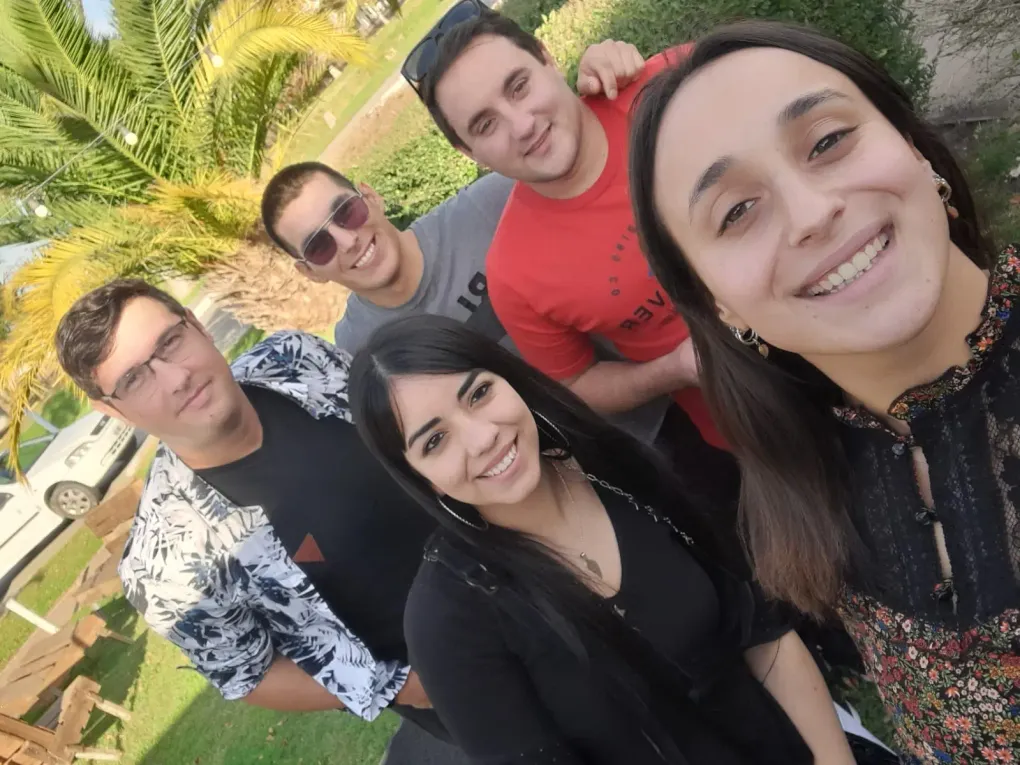
At its peak, RusticIT worked with multiple clients at the same time across Argentina, Spain, the United Kingdom, and Israel, with a fully distributed team of collaborators across Argentina, Venezuela, and Bolivia.
That stage of the company taught me a lot about coordination, communication, priorities, and the realities of building value across very different types of clients and needs, not just about software delivery.
More than software development
One of the most important things about RusticIT was its range.
The company did not operate in a narrow box. We worked across:
- software development
- website design and implementation
- mobile apps with React Native and Flutter
- digital marketing support
- social media content creation
- content production for both our own brands and client accounts
That variety mattered because real client work is rarely isolated.
A client may need a landing page, but also a mobile app. Or a system, but also a public-facing brand presence. Or technical implementation, but also content that helps the product be seen and understood.
RusticIT was built around that reality. The company site still presents it as a team focused on design, consulting, development, digital knowledge, and modern mobile and web experiences.
A distributed team before it became normal
Another defining part of RusticIT was that it operated as a 100% distributed team. That matters more in hindsight: today, distributed teams are common, but building and coordinating a small multi-country team across Latin America while serving clients in multiple markets taught me early lessons in remote execution, async communication, ownership, and trust. That experience still shapes how I work.
It taught me how to communicate clearly across roles, keep momentum without micromanagement, adapt to different client expectations, and coordinate creative and technical work at the same time while keeping quality moving across several parallel efforts.
In many ways, RusticIT was where I learned to operate as both a builder and an organizer.
Real services for real clients
What made RusticIT meaningful was that it was built around actual delivery, not theory.
Different clients needed different things. Some needed websites. Some needed apps. Some needed branding support. Some needed technical execution from scratch. Some needed help making their business visible online, not just functional.
That forced a very practical mindset. We weren’t optimizing for abstract perfection, we were solving real business problems with the resources available.
The current RusticIT site still reflects that spirit: helping clients turn ideas into products, offering web and mobile design and development, with projects ranging from landing pages to web apps and backoffice systems.
The social and content side also mattered
Another part of RusticIT that is easy to overlook was the marketing and content work. We didn’t only build products, we also worked on visibility, creating content for social media for both RusticIT itself and for clients. That side of the work mattered because it reinforced something I still believe strongly: a good product isn’t only something that works well, it also needs to be presented clearly, positioned correctly, and explained in a way people can connect with.
That combination of software and communication ran through everything the company did.
What changed over time
Markets evolve. Client demand changes, teams change, opportunities change.
Over time, RusticIT evolved from being a broader distributed company with multiple collaborators into a much leaner structure where I became the only employee, focused primarily on delivering value to German clients.
That’s not a contradiction to the original vision, it’s part of the evolution. The market pushed the company toward higher-trust, more specialized international work. The capacity behind RusticIT didn’t disappear, if anything it got more refined.
The company can still create value across multiple kinds of digital work because the underlying experience is real: building products, serving clients across countries, managing distributed collaboration, working across software, design, and communication, and adapting to what the market actually rewards.
Why RusticIT still matters to me
RusticIT proved to me that I could build more than features, I could help build a company: one with clients in different markets, a distributed team, work across technical and creative disciplines, and the ability to adapt as the market changed.
That experience shaped how I think about business just as much as it shaped how I think about software. RusticIT was never only about code. It was about turning ideas into outcomes, with whatever combination of design, development, systems thinking, and communication was required to make that happen.